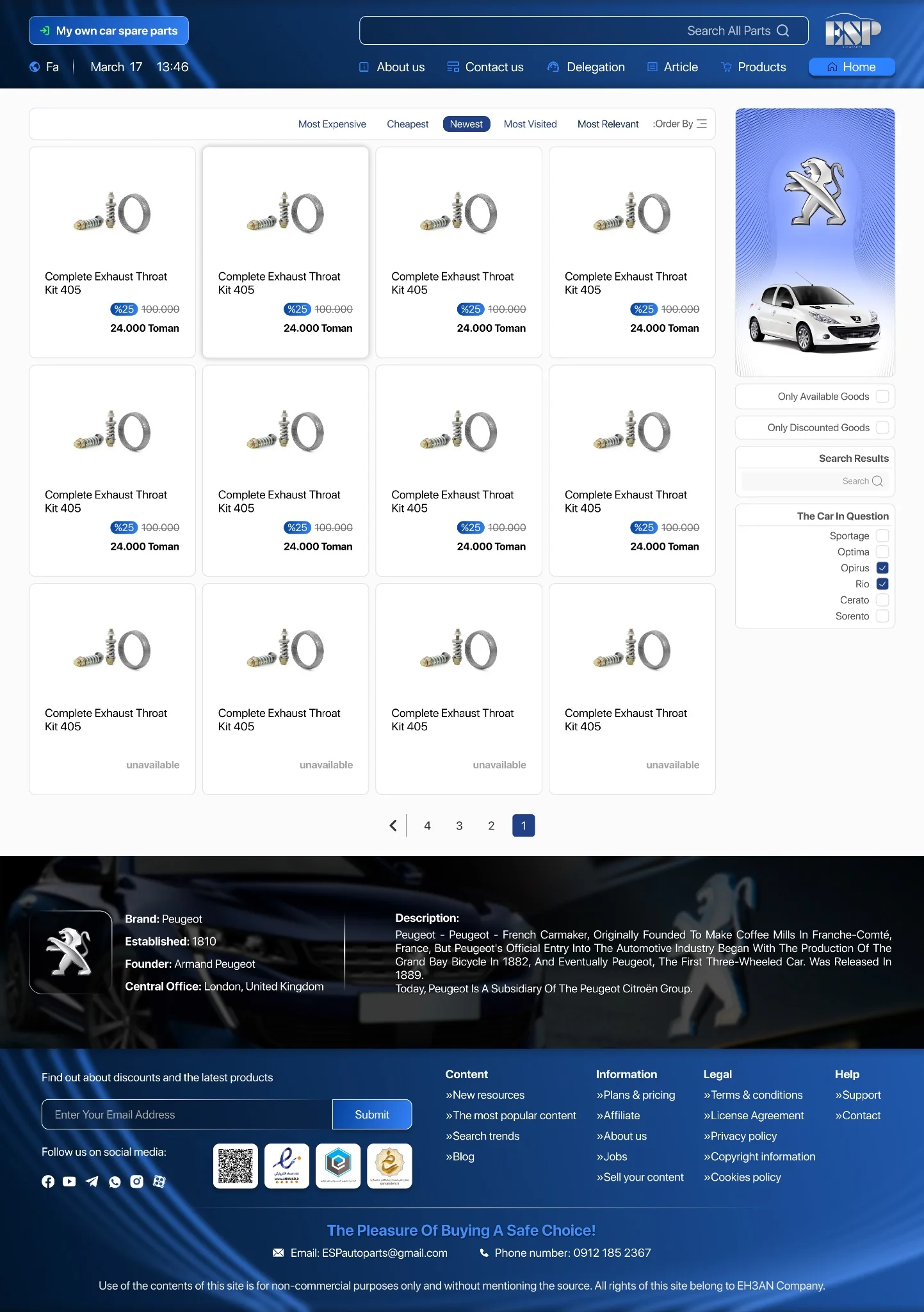
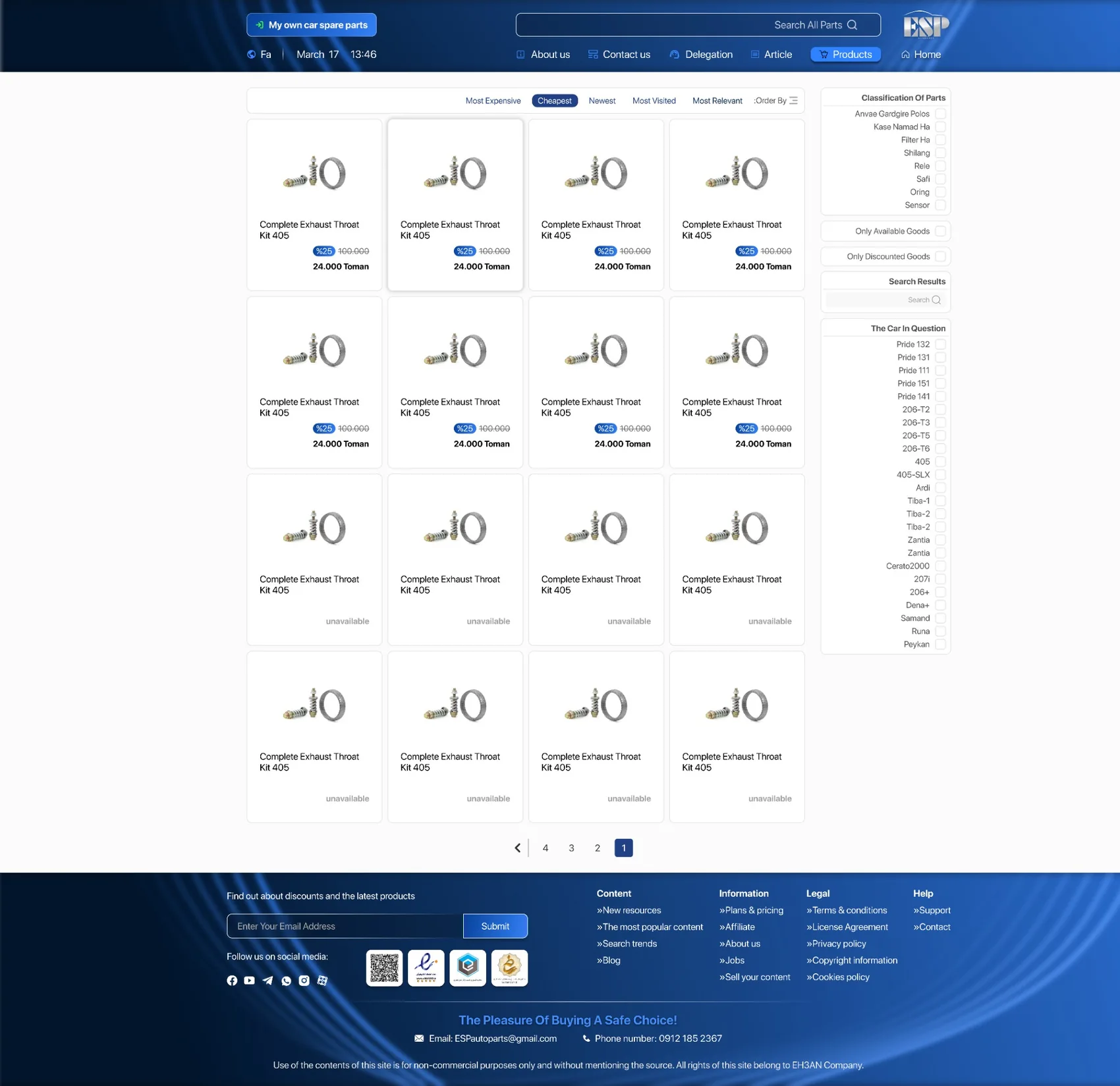
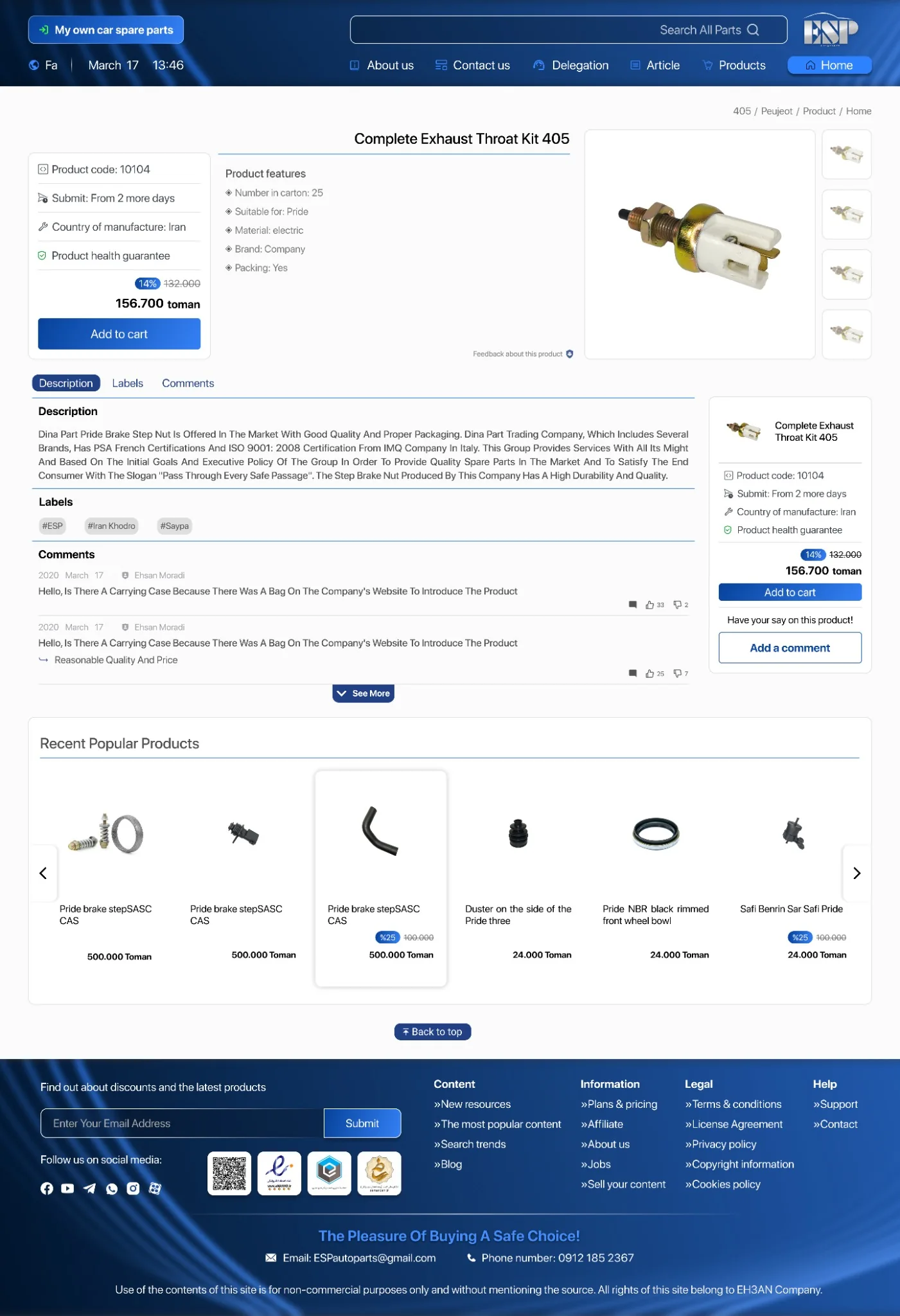
Custom interface implementation
Translate an externally designed, visually detailed automotive storefront into responsive HTML, SCSS and JavaScript.
A custom automotive parts storefront developed from supplied UI designs into a WordPress and WooCommerce website, delivered to the client in 2021.
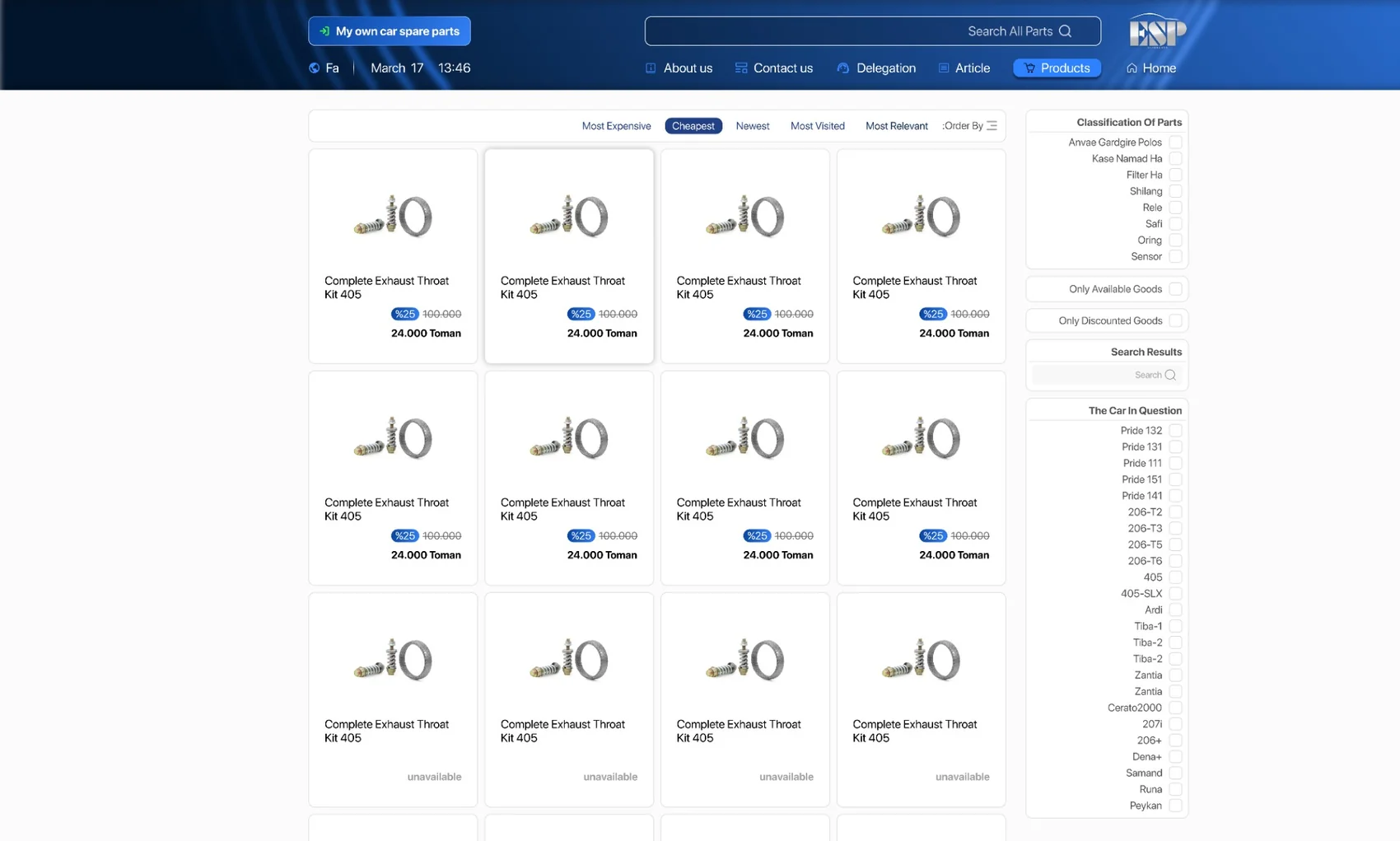
A custom client storefront for an automotive spare-parts supplier, built from supplied UI designs with HTML, SCSS and JavaScript, then integrated into WordPress and WooCommerce for product discovery, shopping and editable content.
Developed the frontend HTML, SCSS and JavaScript implementation from externally provided UI designs. Built and integrated the custom WordPress theme and WooCommerce storefront views. Prepared product and article presentation templates for client-managed content.
Project context. Commissioned client work delivered in 2021. The UI designs were provided by another designer; I implemented the frontend and custom WordPress integration, with technical mentoring and review. The linked Vercel demo shows the template, while the client managed their own product and article content on the delivered website.
Translate an externally designed, visually detailed automotive storefront into responsive HTML, SCSS and JavaScript.
Support browsing by vehicle brand and model, product categories, sorting, filtering and product detail views.
Connect the frontend layout to reusable WordPress PHP templates and dynamic WooCommerce product data.
Enable the client to manage products and articles through the WordPress administration experience.
A categorized, period-accurate stack. Where useful, the implementation map connects the frontend with the project’s actual platform and data sources.
Technologies actually used in the archived project, grouped by responsibility. Only relevant categories appear.
The foundation the frontend runs on.
Hover, focus, or tap a technology to see how it was used.
Libraries and assets shaping what people see and feel.
Hover, focus, or tap a technology to see how it was used.
Integrations and tools used in the development workflow.
Hover, focus, or tap a technology to see how it was used.
Supplied UI designs
External visual direction translated into responsive HTML, SCSS and vanilla JavaScript.
WordPress + WooCommerce
Content, product records, pricing, catalog taxonomy and store management provided through the CMS and commerce platform.
ESP custom PHP theme
Reusable PHP templates, WordPress queries and tailored styles/scripts present catalog and content views.
Architecture reflects the archived theme and the client-delivered store. The Vercel demo is a static frontend preview, not the source of the client product catalog.
Product discovery was the central interaction challenge: the storefront brings vehicle-specific navigation, searchable catalog pages and detailed listings into one connected shopping experience.
Vehicle brands and models help visitors approach a large parts catalog from a familiar starting point.
Category, availability and pricing controls structure the product discovery process.
Product detail layouts bring together imagery, specifications, price information and purchasing actions.
Explore the original interface
The original branded vehicle discovery interface, presented as an archived screenshot rather than a live widget.
Original project screenshots · Navigation here previews archived pages; it does not simulate a live data connection.
The implementation began as an HTML/SCSS/JavaScript frontend and was integrated into an original WordPress theme. PHP templates, WordPress content queries and WooCommerce product information connected the design to editable business content.
Built the responsive template with semantic HTML, SCSS, JavaScript, Bootstrap and Swiper.
Integrated the layouts into a custom PHP theme with reusable navigation, page and content templates.
Connected product listings and detail views to WooCommerce; the client managed products and articles after delivery.
The original interface design was supplied. Frontend and WordPress development were my responsibility; technical mentoring and review supported delivery.